Living "The Lion King"
A One-Day Safari in Mikumi National Park
I was about five years old when my parents bought our first family video player. The tape we got back then – The Lion King – played almost non-stop, and like many children of the ’90s, I spent a big part of my childhood in the company of Simba, Timon, and Pumbaa.
Going on a safari in Africa and seeing these beloved characters in their natural habitat — so different from the enclosures of even the most beautiful zoos — was a dream come true for me. A dream that had been waiting a long time for the right moment, the right person, and the right place.
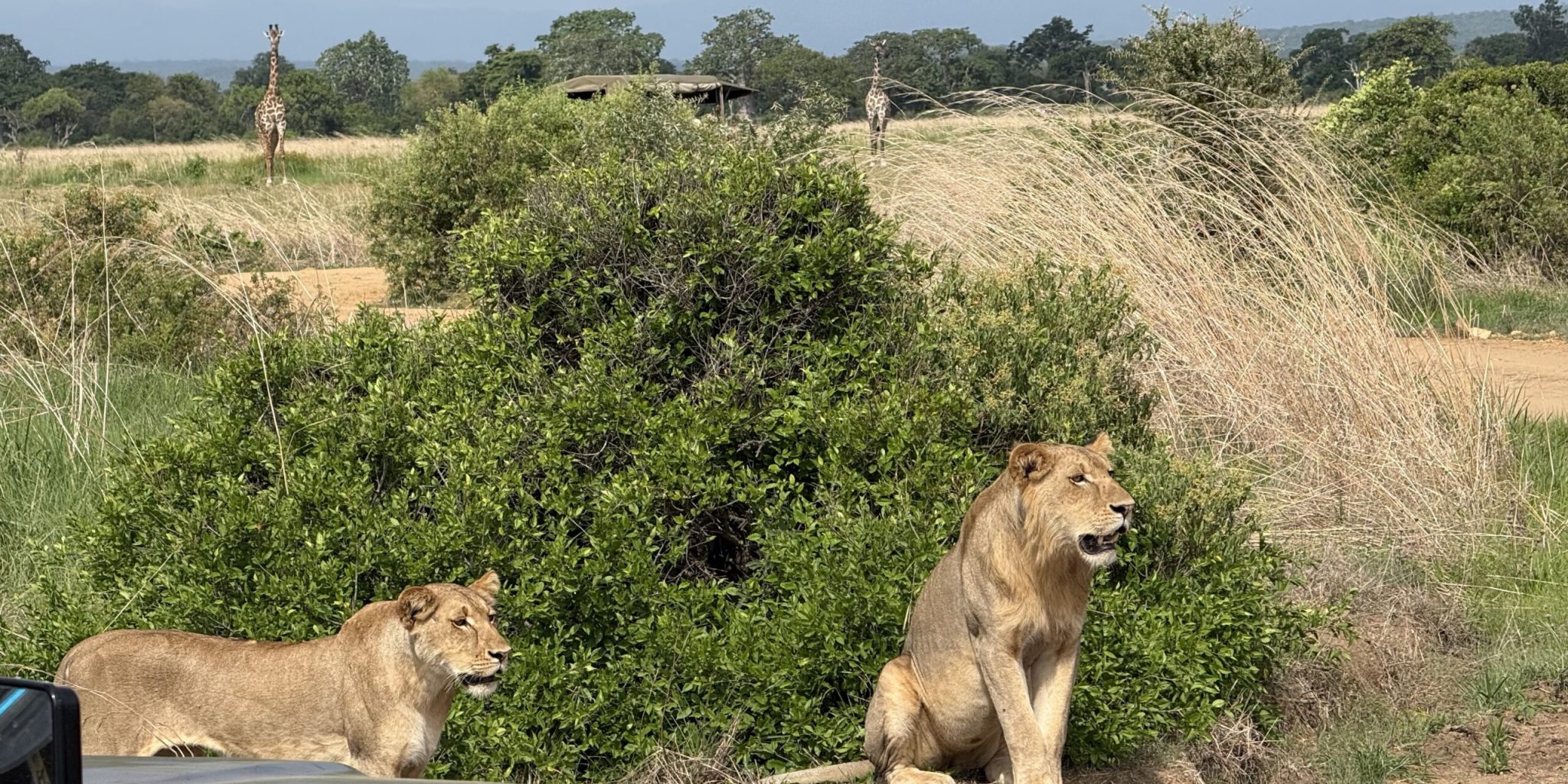
Mikumi National Park
The one-day safari in Mikumi that we chose could best be described as a “safari for beginners.” Mikumi National Park is located in southeastern Tanzania and is about a one-hour flight from Zanzibar.
The park itself is many times smaller than the Serengeti or the nearby Selous, which makes it perfect for a day trip without having to spend the night there — a thought that, I must admit, had always made my safari dreams feel just a little intimidating.
The park’s size makes it possible to encounter a large number of animals in a relatively short time, including four members of Africa’s famous Big Five. The term, which dates back to the 19th century and originally referred to the animals that were the most difficult to hunt, is now used to describe the five most iconic species on the continent and the ones most sought after on safari — the lion, leopard, rhinoceros, buffalo, and elephant.
Unfortunately, rhinos in Mikumi fell victim to severe poaching and disappeared from the park in the 1980s. For several years now there has been talk of restoring the population and reintroducing them to the park, but for the time being there are still no rhinos in Mikumi. However encounters with the remaining four species, as well as many other fascinating animals, are just as exciting.
How did we spend the day in Mikumi
Our day began while it was still dark, when a taxi picked us up from the hotel at 4:45 a.m. We had booked the safari through TripAdvisor, and the agency took care of everything — from the airport transfers and flight tickets to arranging a guide in the park.
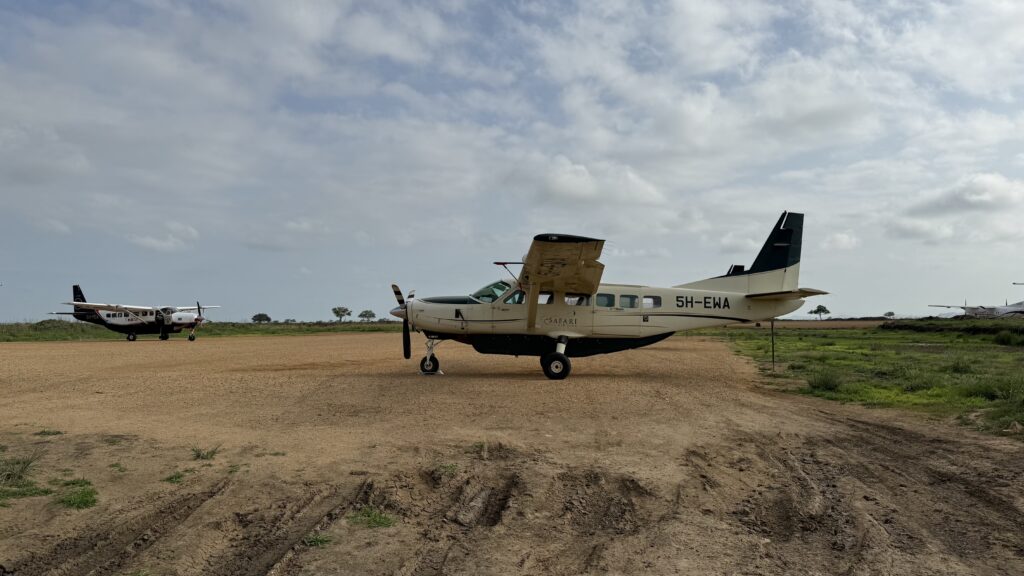
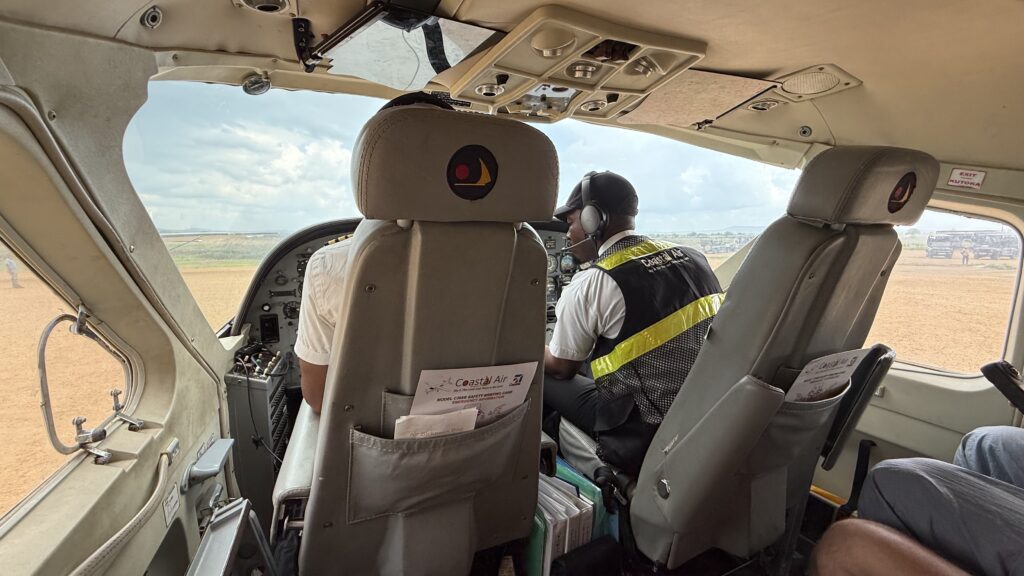
After a brief burst of early-morning chaos at the domestic terminal, we soon found ourselves on board a tiny 12-seater Cessna, flying over Tanzania as the day slowly began to break.
We landed on the small airstrip in Mikumi National Park at around 9 a.m. Almost immediately we were assigned to our jeeps and set off, and just like that the real adventure of the day began.
Our guide welcomed us with a short introduction to the park and the animals we might encounter during the day. He also gave us a few guidelines and a brief safety briefing on how to behave if we happened to come close to dangerous predators — should we be lucky enough to encounter them.
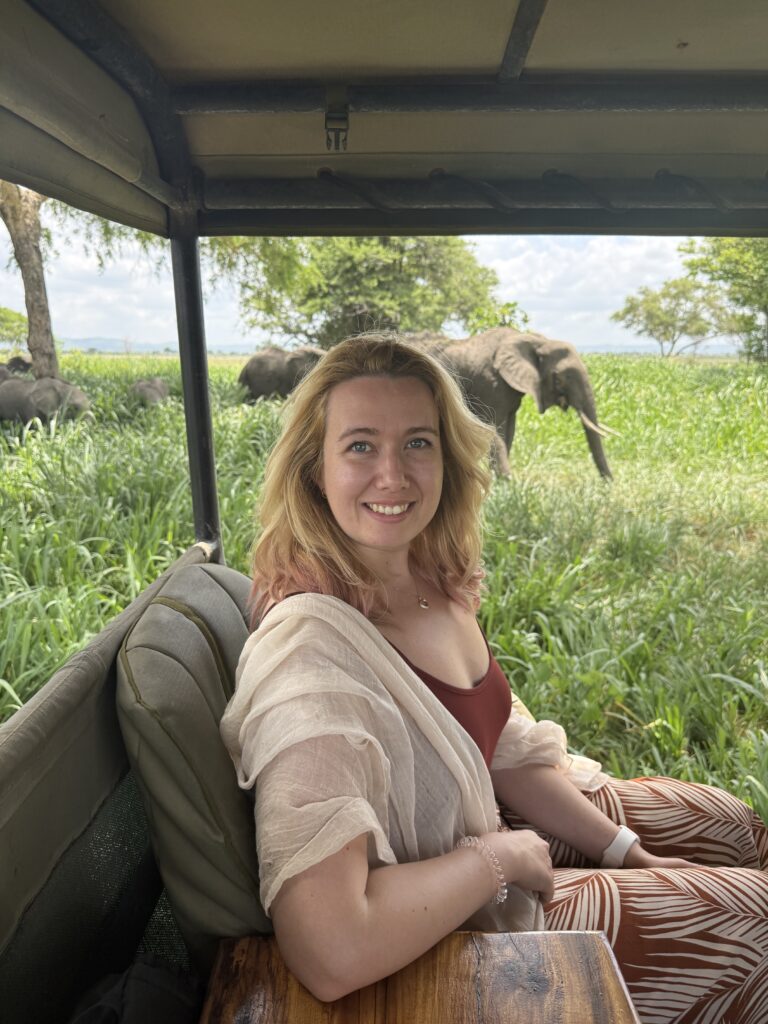
We were in a fully open safari jeep with three rows of seats arranged amphitheatre-style, which made the whole experience feel even more exciting. As we set off, I had absolutely no idea what was waiting for me… 🙂
“Let’s see what nature decides to give us today,” our guide concluded at the end of his introduction.
And nature proved to be incredibly generous.
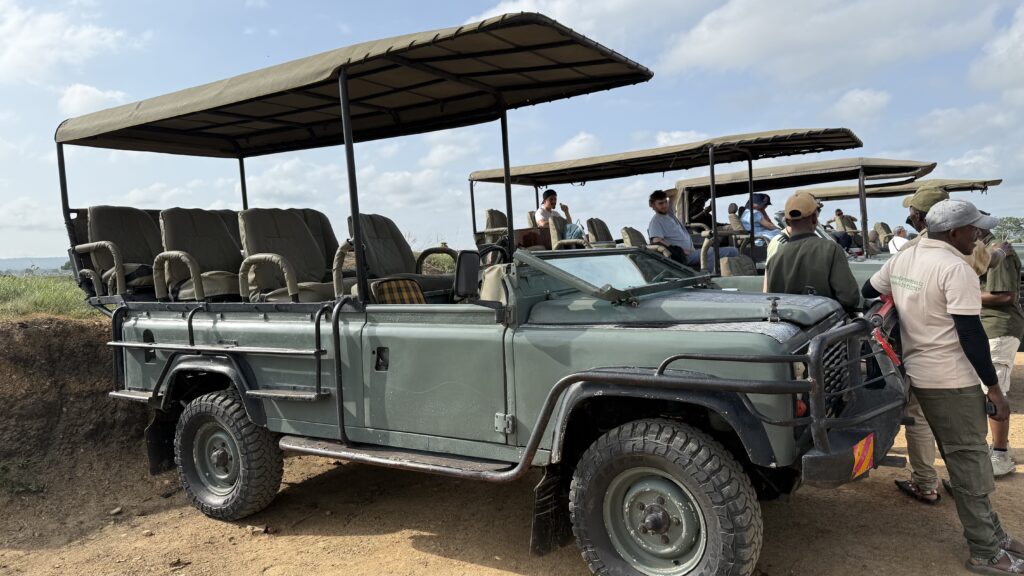
Being on safari is a completely different experience from visiting a zoo. Here, the animals live their own lives, the savannah is their home, and we are merely their guests. We set off with high hopes, but deliberately tried to keep our expectations in check. Unlike zoos, where every animal has its place, a safari is a game of searching. Animals follow their natural rhythms, and some of them — like the big cats — are active mostly at night, spending the daytime resting and hiding in the shade.
The jeep drivers communicate with each other via radio, and whenever someone spots something interesting, they alert the others. Almost immediately after we set off, our radio crackled and our guide told us we would need to hurry — a lion had been spotted nearby.
The first exciting moment came when we noticed a herd of giraffes in the distance and enthusiastically asked our driver to stop so we could admire them. He simply smiled and promised that we wouldn’t leave the park without seeing giraffes, then continued driving toward the location his colleagues had just shared. In the park, giraffes are plentiful — lions, not so much. 🙂
What we encountered next exceeded all our expectations. Spotting a lion in broad daylight on safari is already a rare experience, and spotting an awake lion is even rarer. In our case, we came across a small group — two lionesses and a lion — stalking a group of unsuspecting warthogs sleeping under a tree. The lionesses approached gracefully, preparing for the final leap, but just moments before they charged, one of the piglets noticed them and their attempt was foiled.
A few minutes later, we were given a second chance to witness a hunt — this time from just a few metres away. Frozen like statues, the lionesses were stalking a group of impalas, waiting for the perfect moment to strike. Meanwhile, a herd of giraffes was approaching curiously.
At that moment, I hardly dared to breathe.
What followed unfolded in a matter of seconds. The lionesses suddenly burst into a sprint toward the impalas, but the antelopes proved too fast for them. The cats quickly regrouped, however, and turned their attention to a young giraffe that had wandered a little too close.
Luckily for the little one, the lionesses were already exhausted and couldn’t keep up with its pace. The giraffe escaped with nothing more than a quick nip to the leg.
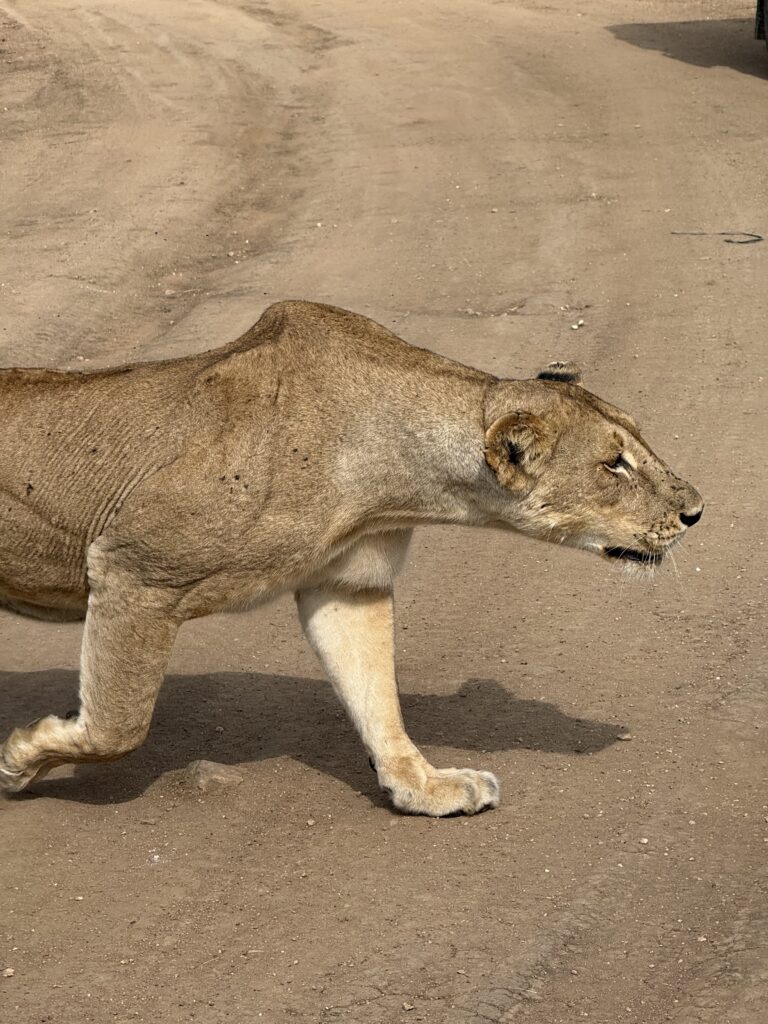
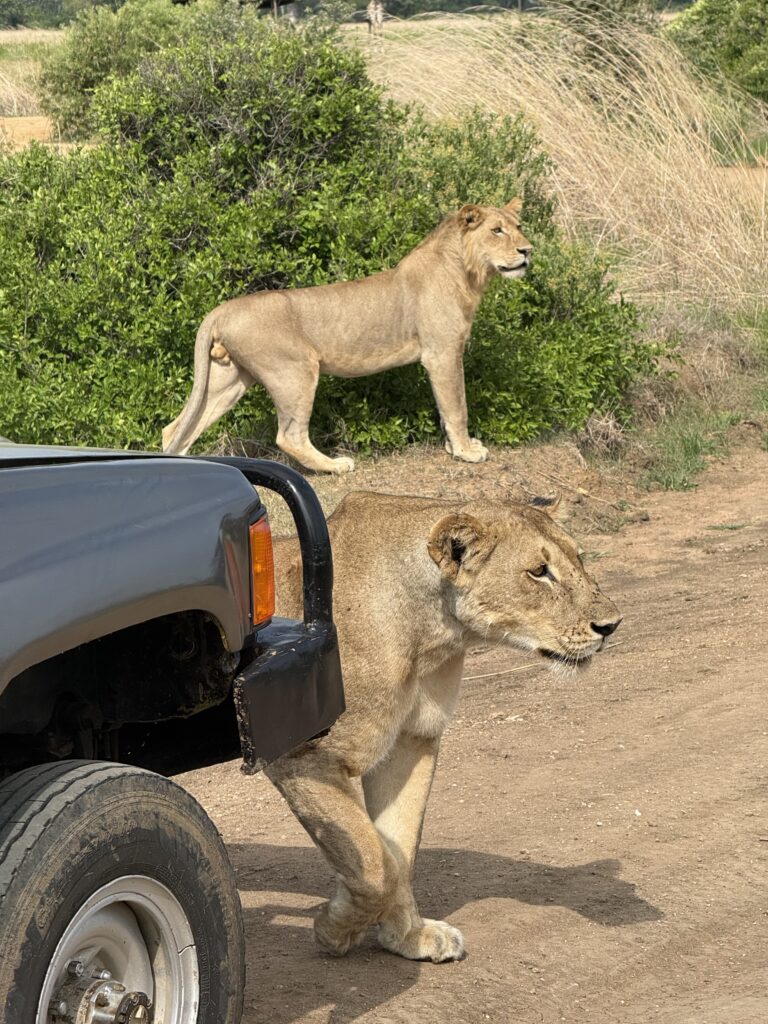
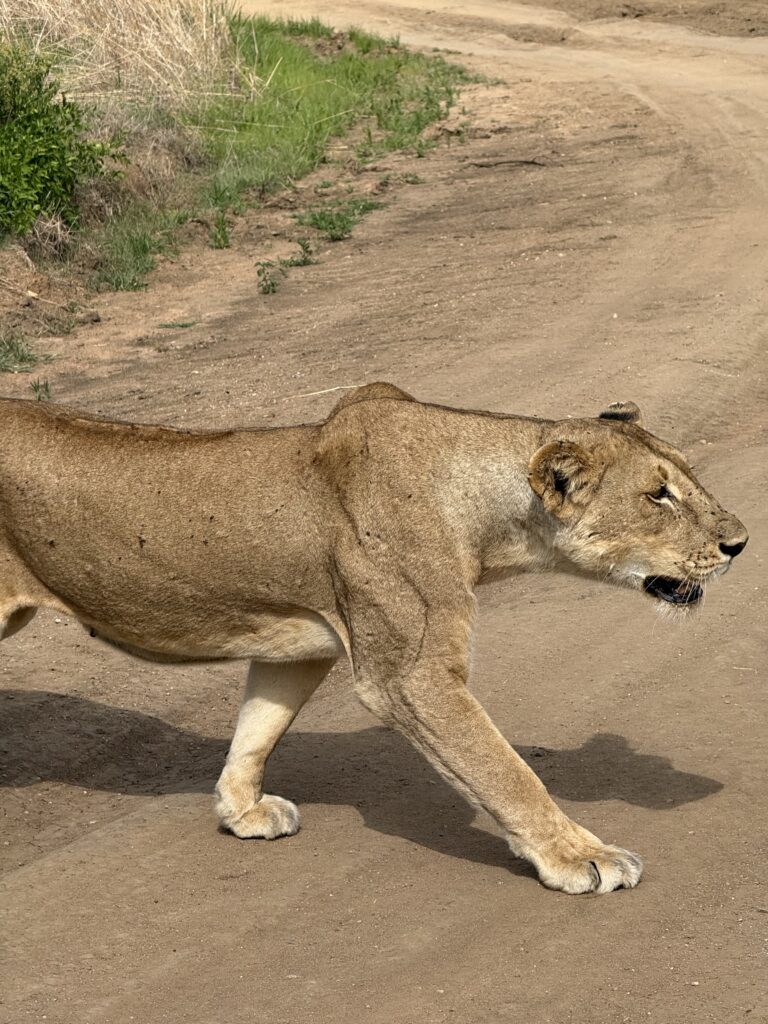
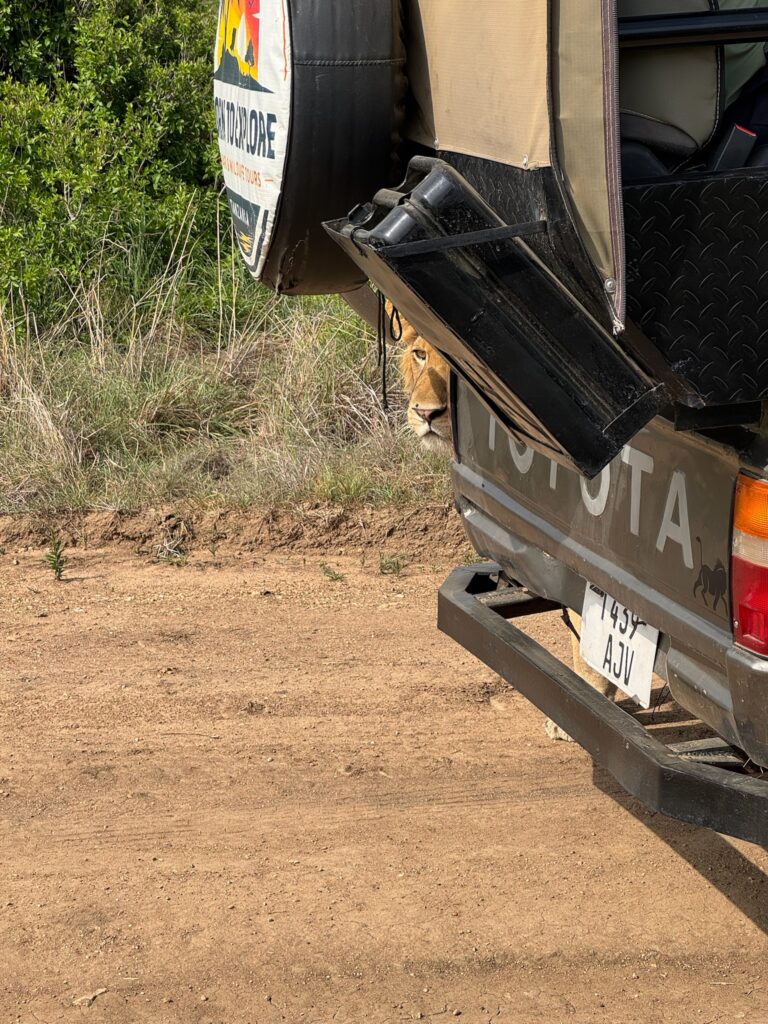
When you’re in the wild, this close to dangerous animals, it’s especially important to follow the guides’ instructions. As I mentioned earlier, we were in an open safari jeep. That means there’s nothing between you and hungry lions — the animals can pass so close that you could reach out and touch their fluffy tails. In moments like these, we were instructed to stay silent and move as little as possible.
Lions see the world differently from us. They rely far more on their sense of smell, and during the day they don’t perceive colors and shapes as vividly as we do. To them, the jeep is just one enormous metal animal — not a box filled with small, tasty humans. The scents of everyone inside mingle with the smells of metal and fuel from the vehicle, and the lions cannot distinguish us from the machine. But if someone were to step out or run, they would quickly become a snack.
All of this unfolded within the first half hour to an hour of being in the jeep, yet it already felt like half a day had passed. And we still had breathtaking encounters ahead of us.
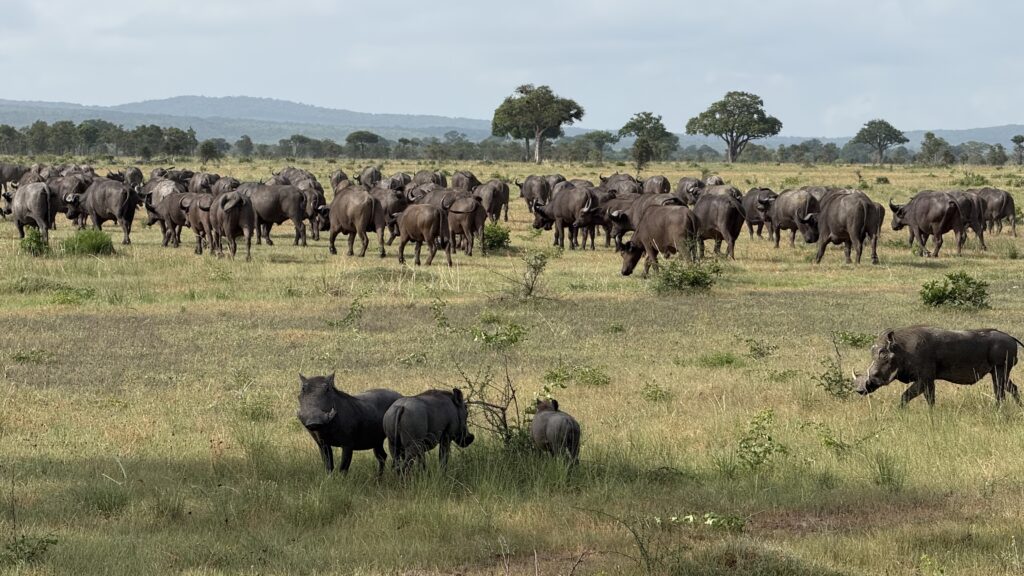
We set off down a path, but at that moment a herd of buffalo was crossing. African buffalo are enormous, incredibly strong, and highly aggressive. They move in large herds, which makes them difficult prey for predators. In our case, the buffalo stretched as far as the eye could see. There was no way to wait for them all to cross, nor to go around them, so we took a different path.
Along the way, we also came across a small group of warthogs — the African pigs made famous by none other than Pumbaa. 🙂
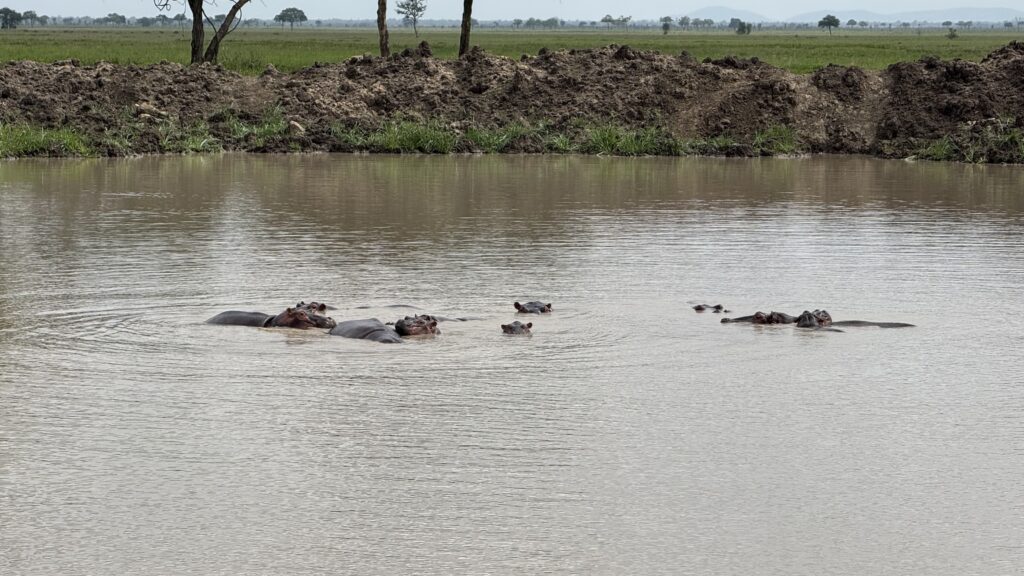
Our next stop was the hippo pool, where we stepped out of the jeep and stretched our legs along the shore while the hippos took their bath. Sometimes they submerged completely, sometimes they surfaced again, looking like enormous, shiny boulders in the murky water. Hippos are extremely territorial animals, and you have to treat them with the utmost caution.
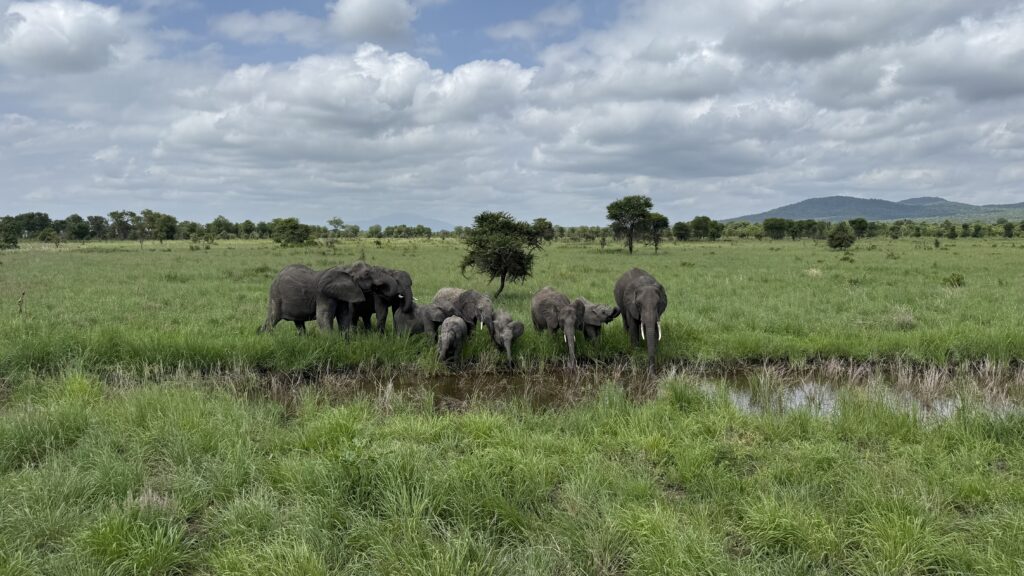
Even though they are herbivores, these adorable giants are the leading cause of fatal encounters with wildlife in Africa. We enjoyed watching the hippos, as well as a small herd of baby elephants drinking at one end of the “pool” — they felt so close that I couldn’t help but hop up and down with excitement. 🙂
One of the less pleasant sides of safaris is that sometimes the jeeps carrying tourists feel more numerous than the animals themselves. They often move in groups, and if someone spots something interesting and alerts the others, the crowd can quickly become overwhelming. This was the moment we were most grateful for our driver. Instead of staying behind and jostling with the other vehicles, we took a less-traveled path. By then, the sun was blazing overhead, and the wind rushing past the moving jeep felt like a welcome relief. After such an emotional morning, a brief ride across the savannah — enjoying the trees, birds, and the occasional distant giraffe — felt like a true reset for the mind.
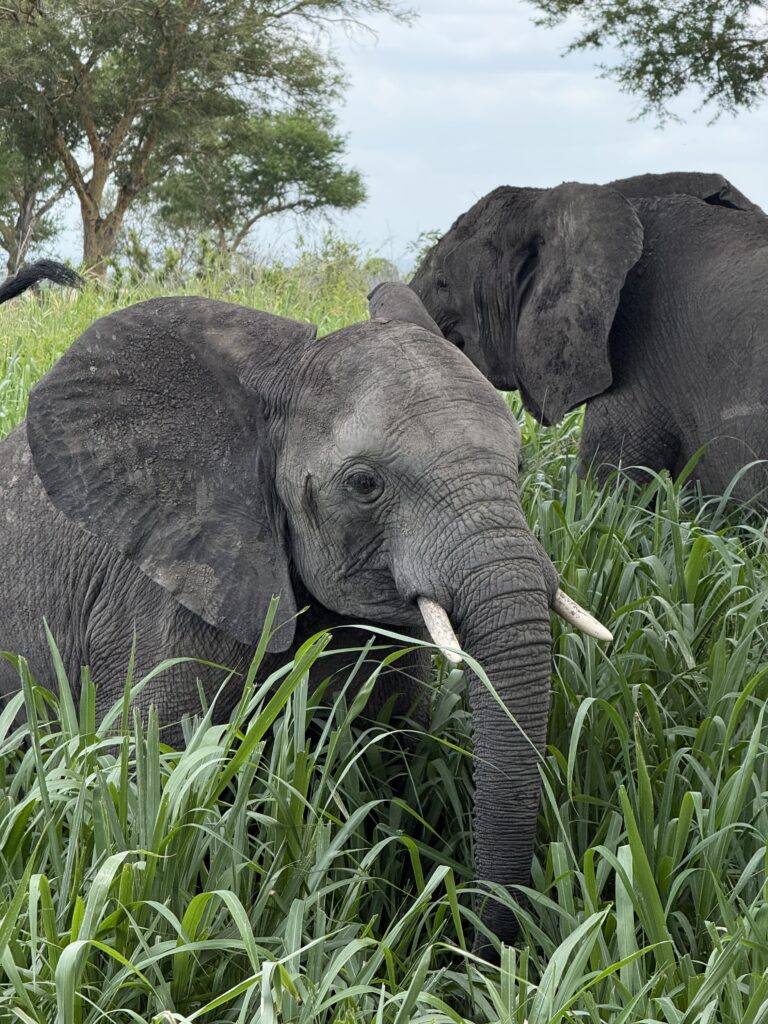
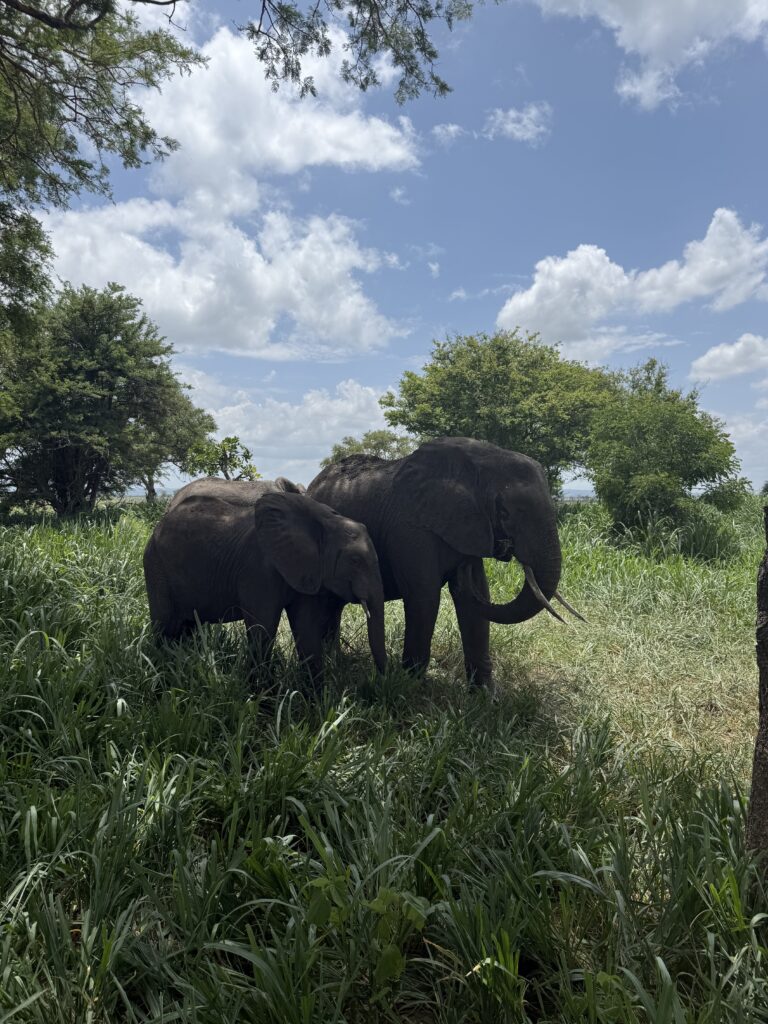
Before long, our guide spotted a herd of elephants moving off the main path and followed them. They were heading toward a nearby stream to drink — two large adult females with a few calves of varying sizes. With twenty years of safari guiding experience, our driver expertly judged just how close to approach and when to stop. One of the adult females, however, was not entirely pleased with our presence. She flared her ears, angled her tusks toward us, and let out a loud trumpet. She was no more than two or three meters away.
In that moment, time seemed to stop. You don’t move, you don’t speak — you only feel the pounding of your heart and realize just how small you are in the face of the wild. The calves continued toward the stream, and we followed at a respectful distance, pausing on the opposite bank to watch. Lined up in a row, drinking, flapping their enormous ears, spraying water with their trunks — it was a scene I will never forget. I could have watched them for hours.
The next thrilling encounter didn’t take long. At the start of the day, we had been promised giraffes — and giraffes we got. We came across a herd grazing among the tall vegetation. Giraffes are much quicker and more skittish than elephants, so we couldn’t get quite as close, but we still had the joy of watching them up close.
Usually, giraffes move together with zebras and impalas. Because giraffes are so tall and have excellent eyesight, they spot dangers like lions and leopards much earlier than the other herbivores. The rest of the animals tend to stay close, using the giraffes as a sort of early warning system. If a giraffe takes off running, it’s probably because a predator is nearby. 🙂
The giraffes in Mikumi Park are a special hybrid, and the locals call them “Masai giraffes” because the shape of their spots resembles the traditional clothing of the Maasai people.
By now, we had traveled quite far from the airstrip and the base where our safari had begun, and lunchtime was approaching — it was time to start heading back. But before we reached the resting spot where we would take a short break, one more unforgettable elephant encounter awaited us.
As we drove, we spotted a new herd grazing right alongside the road. We approached slowly, and they looked us over with curious eyes — this time without any drama — before continuing their meal. Only one little calf got excited, stretching out its trunk and spraying me with drops of “rainwater” collected from the leaves it was munching. 😊
Lunch was included in the safari program and was served in a large building, somewhat reminiscent of a school cafeteria. The food was buffet-style and fairly varied, so unless you’re particularly picky, you definitely won’t go hungry. That said, if hygiene is a concern, it’s probably wise to bring a small snack just in case.
It’s worth mentioning that our jeep was stocked with a large cooler full of plenty of water and soft drinks for everyone, so we never felt thirsty. Water is absolutely essential — even though we were in an open jeep with some wind, the African midday heat is no joke. The moment we stepped out into the blazing sun for lunch, it felt like stepping into an oven.
One funny moment came when we were warned not to leave anything in the jeep because “the monkeys steal.” And sure enough, the moment we parked, we saw a group of monkeys rifling through a neighboring vehicle, searching for treats. One even hid in the shade of a car, surrounded by candy wrappers, happily munching away. After lunch, the monkeys moved on to inspect the tables for leftovers, much like the street cats we’re used to seeing at outdoor cafés back home.
Refreshed and rested, we climbed back into the jeep — we had about an hour or two left to explore before our flight home. Our guide gave his all to try and spot a leopard — we drove through small groves while he scanned the branches of lone trees with binoculars. Leopards, like lions, are nearly impossible to spot during the day — they often sleep up high in the branches, and in the savannah, trees are endless.
Although we weren’t lucky enough to see a leopard, the day ended in the most wonderful way. As we peered at the branches of yet another tree, a sudden, heavy tropical rain began to pour. Instantly, the air was filled only with the scent of wet earth and grass, the savannah grew quiet, and all we could hear was the rhythmic patter of the raindrops. Colors seemed to glow brighter, and the whole scene felt almost surreal. It was a magical finale to an incredible day that had come straight out of my dreams.
The rest of the day passed by in a bit of a haze. We had woken up at 4 a.m., and fatigue, the heat, and all the emotions began to catch up with us. They drove us to the airstrip, where we boarded the small plane once again and took off against the backdrop of rain and the lightning flashing beside us. Back at Zanzibar airport, our driver from that morning was waiting to take us back to the hotel.
Practical tips for organizing the Safari and making the most of the experience
- Choose Your Tour Operator Carefully – There are dozens of offers on the island, as almost everyone provides tourist services. We went with Hola Africa, booked via TripAdvisor, and paid directly on the site. My advice: always read reviews and ratings carefully before deciding.
- Have Realistic Expectations – A safari is nothing like visiting a zoo. There’s no guarantee you’ll see the animals you most hope for. Focus on enjoying the day, the savannah, and the adventure — everything else is a bonus.
- Respect Nature and Animals – Remember, you are a guest in their home. Don’t pollute, intrude on their space, or disturb them. Never try to touch or feed the animals!
- Motion Sickness Precautions – If you get car sick, bring appropriate medication and consult your doctor or pharmacist beforehand. Safari tracks are bumpy and off-road in places. Fasten your seatbelt and hold on tight, especially in an open jeep.
- Sun Protection is Essential – The African sun is intense. Sunscreen, hats, and sunglasses are a must. We usually get our sun protection from eMAG; it’s a reliable companion for both beach holidays and everyday summer life.
- Repellent, Repellent, Repellent – Apply thoroughly and bring some for reapplication during the safari. We were diligent and didn’t get bitten once. Choose a repellent effective against tiger mosquitoes; we used one from Decathlon after checking the ingredients carefully.
- Dress Appropriately – Wear light, earthy, or neutral tones (beige, white, light green) to avoid attracting tsetse flies. Long sleeves and pants are recommended, or at least something to cover your skin. Natural fabrics work best, and expect to get dusty by the end of the day. Comfortable, closed shoes are advised — avoid sandals or flip-flops.
- Bring Cash – Even if you book and pay online, it’s common to tip your guide and the taxi driver in cash.
- Plan for a Well-Rested Start – The safari is emotionally intense and physically exhausting, especially with the early wake-up. Make sure you are rested to fully enjoy the experience.
- A Bonus Tip: Beware of Monkeys – They may seem cute, but they are wild animals. While most animals avoid close contact with humans, monkeys can approach boldly. Never feed them, and avoid chasing them for photos. Human food can harm them, and a monkey bite may require a series of rabies vaccines.
For me, the safari was a dream come true — an experience I would repeat in a heartbeat. Thank you for staying with me until the end of the story. I’d love to hear your thoughts, and if you have any questions or just want to chat about travel, wildlife, or adventures in small planes, you can find me on Instagram.
Some of the links in this blog are affiliate links. If you make a purchase through them, I may earn a small commission at no extra cost to you. I only share products and services that I personally use and genuinely recommend. This is one of the ways the blog is supported and allows me to continue sharing my adventures, destinations, and beautiful moments along the way.